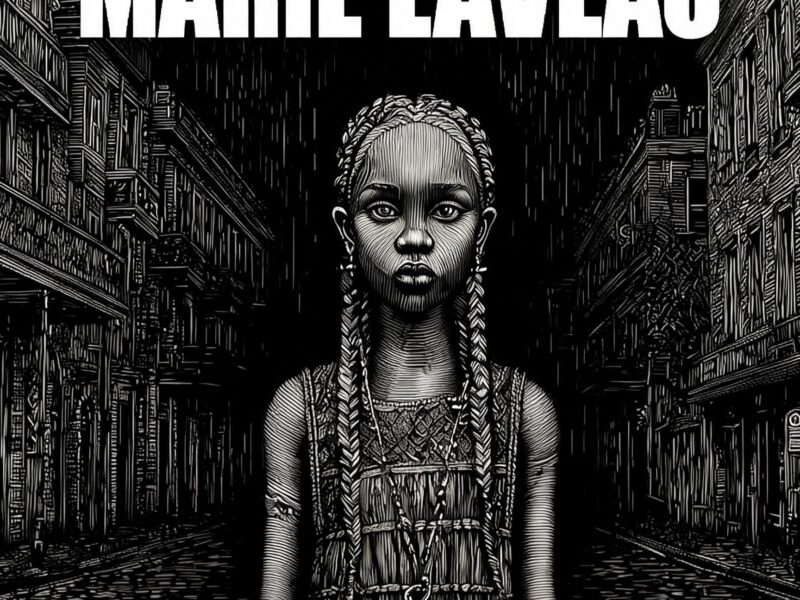
Marie Laveau Wasn’t What You Think | The Most Feared Woman in New Orleans
Part 1
The tourists always asked about the X marks first.
They came through the iron gate of St. Louis Cemetery No. 1 with sunscreen shining on their foreheads, paper wristbands pinching their wrists, phones lifted before their faces like little mirrors for the dead. They wanted ghosts before history. They wanted a thrill before the truth. They wanted to know where to knock, what to whisper, how many times to turn around, what offering to leave, what wish to make, and whether the woman inside the tomb would answer if they got the ritual right.
Elise Baptiste hated that part most.
Not because she hated tourists. Tourists were just people trying to touch a city they did not understand. New Orleans encouraged that misunderstanding. Sold it by the glass, by the haunted tour, by the plastic beads, by the lurid paperback covers in airport gift shops. The city knew how to dress grief in velvet and charge admission.
But the tomb was not a carnival booth.
It was not a vending machine for miracles.
It was a family crypt.
Whitewashed. Weather-worn. Pocked by time, heat, hands, and stupidity. The Glapion tomb sat among narrow cemetery paths beneath a sky so bright it hurt to look at, surrounded by other aboveground graves stacked like small houses for the dead. Heat rose from the stone. The air smelled of dust, wilted flowers, candle wax, and the faint sourness of old offerings gone bad.
Elise stood before the tomb with a brush in her hand and watched a red-haired woman in a bridal sash try to sneak a lipstick mark onto the side wall.
“Don’t,” Elise said.
The woman froze.
Her friends laughed.
“I wasn’t doing anything.”
“You were about to damage a protected burial site.”
“It’s just lipstick.”
“It’s always just something.”
The woman flushed. “I thought you’re supposed to mark it.”
“You’re supposed to respect it.”
A tour guide near the path cleared his throat, embarrassed but not enough to intervene. Elise recognized him. His name was Dale. He wore a straw hat and told groups that Marie Laveau had once turned a man into an alligator, which was at least more original than the pepper-under-the-judge’s-bench story everyone else sold like pralines.
The bride-to-be backed away, muttering something about bad vibes.
Elise returned to her work.
She was not officially a cemetery employee. Official things in New Orleans were complicated, and old cemeteries were more complicated than most. Elise was a restoration specialist, a historian by training, a conservator by profession, and, according to her grandmother, someone who spent too much time with people who could no longer pay her back. She had been hired by a preservation nonprofit after the vandalism years earlier, when someone had painted the tomb bright pink in an act of desecration so gaudy and stupid that for weeks the whole city seemed to argue about whether outrage could be strong enough to bleach color from stone.
It could not.
Traces remained.
Even now, beneath careful layers of limewash, Elise sometimes found faint pink residue in the cracks, stubborn as a rash.
She dipped her brush into clean water and worked gently at the edge of a damaged patch. The tomb’s surface was warm beneath her gloved fingers.
Behind her, Dale lifted his voice.
“Now, ladies and gentlemen, this is probably the most famous tomb in New Orleans. Some say the Voudou Queen herself lies here. Others say she still walks the Quarter in white, looking just as young as she did two hundred years ago.”
A child asked, “Is she evil?”
Elise’s hand stopped.
Dale chuckled. “Depends who you ask.”
Elise turned.
The child was maybe ten, skinny, with a water bottle hanging from a strap around his neck. His mother pulled him closer, half smiling, half nervous.
“No,” Elise said.
The tour group looked at her.
Dale’s smile stiffened.
Elise set down her brush.
“She was not evil. She was a woman. A free woman of color in a city built to limit women like her. A Catholic. A healer. A mother. A hairdresser who heard the secrets of people richer than she was and learned how power moved through parlors and kitchens. A spiritual leader in a tradition newspapers later twisted into horror stories because fear sold better than truth.”
The child blinked at her.
Dale’s mouth worked.
Elise looked back at the tomb.
“She was feared because people fear women they cannot control.”
No one laughed after that.
The tour moved on in uncomfortable silence.
Elise crouched again, angry with herself for saying too much and angrier that it needed saying at all.
That was when she saw the hair.
At first she thought it was Spanish moss blown in from a tree, though there were no trees close enough. Then she thought it was thread from some cheap souvenir scarf, caught in a crack between plaster and brick.
But when she touched it with her tweezers, it resisted.
Human hair.
Black, coarse, braided into a tiny knot and tucked deep into a fissure no wider than a fingernail.
Elise leaned closer.
Beside the hair knot, nearly hidden under limewash, someone had scratched letters into the tomb.
Not an X.
Not initials.
A sentence.
THE SECOND ONE IS HUNGRY.
Elise stared until the heat around her seemed to thin.
“Dale,” she called.
He was already gone.
The cemetery had swallowed his tour around the corner, their voices fading between tombs.
Elise photographed the inscription, then the hair knot, then the surrounding stone. She was reaching into her bag for an evidence envelope when she heard someone whisper from inside the tomb.
“Widow Paris.”
She fell backward so hard her shoulder struck the opposite grave.
A sharp pain shot down her arm.
The cemetery path was empty.
No tourists. No guide. No grounds worker. Only sun, stone, heat shimmer, and the tomb before her.
Elise stood slowly.
Her pulse beat behind her ears.
“Who’s there?”
No answer.
She looked around, ashamed of how small her voice sounded. She did not believe in ghosts in the way tourists wanted her to. She believed in memory. She believed places held pressure. She believed grief lingered in habits, in names, in rituals, in things families refused to throw away. She believed the dead mattered.
But she did not believe they whispered from tombs at 11:42 on a Tuesday morning.
Then something knocked from inside the crypt.
Three times.
Elise stopped breathing.
The knocks came again.
Slow.
Patient.
She backed away, one hand gripping the iron fence.
From somewhere beyond the cemetery wall, St. Louis Cathedral began to ring the hour.
The tomb answered.
Not with bells.
With drums.
Low at first, then deeper, layered, impossible. The rhythm moved through the stones under Elise’s feet. It smelled suddenly of rain though the sky was clear. Heat pressed down. Sweat slid along her spine.
Then the little knot of hair in the crack began to move.
It tightened.
Like a living thing pulling itself awake.
Elise ran.
By the time she reached the cemetery office, the drums had stopped. The city noise returned all at once: engines, horns, distant laughter, carriage hooves in the Quarter, a street musician playing trumpet somewhere beyond the gate.
The office manager, a broad-shouldered woman named Josette, looked up from a stack of permits.
“Elise?”
“There’s something in the tomb.”
Josette stared. “Please don’t say that.”
“I heard knocking.”
“Please really don’t say that.”
“And I found an inscription.”
That changed Josette’s face.
“New vandalism?”
“I don’t know.”
“You photographed it?”
Elise handed over her camera.
Josette scrolled through the images.
When she reached the sentence, she stopped.
THE SECOND ONE IS HUNGRY.
Her lips parted.
“You’ve seen that before,” Elise said.
“No.”
“Josette.”
The older woman set down the camera carefully.
“You need to call Dr. Marchand.”
Elise felt the first true cold of the day.
“Why?”
“Because he told me if anything like this appeared, I was to call him before anyone else.”
“Anything like what?”
Josette looked toward the office window. Beyond it, the white tombs shone in the sun.
“Anything that mentioned the second Marie.”
Dr. Lucien Marchand lived on the upper floor of a narrow house on Esplanade Avenue, behind green shutters and a wrought-iron balcony crowded with plants that should have died in the heat but did not. He was eighty-three, retired from Tulane, and still capable of making graduate students cry with three words written in the margin of a thesis.
Elise had studied under him twelve years earlier.
He opened the door before she knocked.
“You found hair,” he said.
Elise stepped back.
“Josette called you.”
“Josette said inscription. She did not say hair.”
He turned and walked inside, leaving her to follow.
His apartment smelled of old paper, coffee, bay leaves, and camphor. Books filled every wall. Catholic saints stood beside African carvings, archival boxes, jars of dried herbs, candles burned low in saucers, and framed photographs of Congo Square from public collections. On a side table, beneath glass, lay a yellowed newspaper clipping with the headline: VOODOO ORGIES AT BAYOU ST. JOHN.
Someone had underlined ORGIES in red.
Elise hated the word on sight.
Marchand saw her looking.
“That headline fed more monsters than any ceremony ever did,” he said.
“What is happening?”
He gestured for her to sit.
She remained standing.
He sighed. “You always did prefer fear upright.”
“You knew something was going to appear on that tomb.”
“I knew something might.”
“Because?”
“Because it has happened before.”
He poured chicory coffee into two small cups.
Elise did not touch hers.
Marchand lowered himself into a chair with effort. His hands trembled now, but his eyes were as sharp as she remembered.
“In 1881, after Marie Catherine Laveau died, people did not let her die properly,” he said. “That is the beginning of this.”
“People kept visiting her tomb.”
“Visiting is not the same as consuming.”
Elise sat.
Marchand continued.
“They wanted favors. Power. Proof. A story. Some came in devotion, yes. Some came because they loved her. But others came to take. They scratched the stone. Knocked. Turned around. Left coins, rum, hair, bones, demands. They asked the dead woman to work.”
Elise thought of the bride with lipstick.
“They still do.”
“Yes. But there was a period, late nineteenth century, when the attention changed. Her name split. Marie the healer became Marie the sorceress. Marie the Catholic became Marie the witch. Marie the community leader became Marie the nightmare figure. Newspapers helped. Tourists helped. Men with notebooks helped most of all.”
He pointed to the clipping.
“They made a second woman out of rumor.”
“Marie II.”
“Not her daughter. Not Marie Philomene, though the confusion gave it clothing. I mean something else. A public invention. A younger, darker, hungrier Marie made from everything outsiders wanted to fear and desire.”
Elise stared at him.
“You’re saying the legend became real.”
“I am saying legends are not harmless when fed long enough.”
The apartment seemed to darken at the edges.
Marchand leaned forward.
“The real Marie healed the sick. Prayed with condemned men. Listened in parlors. Built networks among women and servants. Stood in Congo Square and Bayou St. John where sacred memory survived slavery’s attempt to erase it. But the city, especially white newspapers after the Civil War, created another figure. A spectacle. A woman of blood rites, seduction, curses, obscene ceremonies. That figure was easier to sell.”
“And now?”
“Now it wants to live.”
Elise looked at her photographs again.
THE SECOND ONE IS HUNGRY.
“Hungry for what?”
Marchand did not answer immediately.
Outside, a streetcar bell clanged faintly.
The old man flinched.
“For names,” he said.
That night, Dale disappeared.
His tour group said it happened near the cemetery gate at dusk. One moment he was telling them about the Widow Paris, how Marie kept her dead husband’s name and turned loss into reputation, and the next he stopped mid-sentence. He had been standing with his back to the closed cemetery, one hand raised theatrically toward the wall.
According to the red-haired woman Elise had scolded earlier, Dale smiled at someone over the group’s shoulders.
Then he said, “Well, I’ll be damned.”
He walked to the gate, unlocked it though he should not have had a key, stepped inside, and closed it behind him.
The tourists thought it was part of the performance until he began screaming.
Police found his straw hat in front of the Glapion tomb.
They did not find Dale.
But on the tomb’s fresh limewash, written in something dark and sticky, was a new sentence.
HE TOLD THEM I WAS EVIL.
Inside the crypt, something laughed like a young woman.
Part 2
Detective Mara Voss hated cemetery cases.
She hated the heat off the stone, the narrow paths, the way grieving families and thrill seekers stood too close to the same dead. She hated how the press lost its mind whenever anything happened near Marie Laveau’s tomb, as if New Orleans had been waiting all year for permission to become a caricature of itself.
Most of all, she hated that her grandmother had warned her.
“Don’t take cases where the dead already have a reputation,” Nana Solange used to say. “Living people do worse things when they think the dead will get blamed.”
Mara had been a cop for seventeen years. She believed Nana was right about living people and wrong about almost everything else.
At least, she had until she saw the inside of Dale Boudreaux’s apartment.
Elise met her there the morning after the disappearance, because Dale had called Elise seven times before vanishing. Mara had found Elise’s name in his recent calls and asked her to come answer questions. The apartment was above a daiquiri shop on Decatur, three rooms full of tour-guide clutter: laminated ghost photos, prop candles, skull-shaped shot glasses, books on New Orleans hauntings, three plastic snakes, and a closet full of costumes organized by era and offensiveness.
“He was a hack,” Elise said, looking around.
Mara raised an eyebrow.
“Sorry.”
“Don’t be. Missing people don’t become saints until the second press conference.”
Elise almost smiled.
In Dale’s bedroom, every wall was covered in research.
At first Elise thought she had misjudged him.
There were photocopies of baptismal records, property maps, court notes, newspaper clippings, yellow fever death lists, sketches of Congo Square, references to Saint Ann Street, handwritten timelines of Marie’s life, details about Jacques Paris’s disappearance from the record, notes on Louis Christophe Duminy de Glapion, and long passages about free women of color navigating race, class, law, and reputation in antebellum New Orleans.
Then Elise saw the red string.
It connected everything to photographs of women.
Marie Laveau.
Marie Philomene.
Other women labeled POSSIBLE MARIE II.
At the center of the wall, Dale had pinned a modern photograph of the tomb after the 2013 vandalism, bright pink paint screaming across the old stone.
Beneath it he had written:
THE PAINT WAS NOT VANDALISM. IT WAS A REVEAL.
Mara muttered, “Oh, Dale.”
Elise stepped closer.
Below the photograph sat a line of names.
All women.
Some historical. Some modern.
Beside three of the modern names, Dale had drawn small black crosses.
“Detective,” Elise said.
Mara came beside her.
The crossed names were familiar to anyone who followed missing persons in the city.
Tasha Emery, a nursing student who disappeared after a St. John’s Eve event near Bayou St. John five years ago.
Celeste Robichaux, a French Quarter bartender last seen leaving work during a summer storm three years ago.
Nadine Cole, a cemetery tour guide who vanished six months after the pink vandalism.
Mara’s expression changed.
“What the hell was he working on?”
Elise read Dale’s note beneath the names.
THE SECOND MARIE DOES NOT REPLACE THE FIRST. SHE RECRUITS.
In the kitchen, they found jars.
Seven of them, lined along the windowsill behind a curtain, each sealed with wax. Inside were different things suspended in cloudy liquid: hair, fingernails, a strip of blue cloth, a rosary bead, something that might have been a tooth, and in the last jar, folded so tightly it looked like a dead insect, a piece of paper.
Mara called crime scene.
Elise stood in the doorway, chilled despite the heat.
“Do you think he was doing rituals?”
“I think people buy ritual supplies on Etsy and decide they’re priests,” Mara said. “But I also think we’re not touching those jars.”
One jar clicked.
Both women went still.
The jar with the folded paper rocked gently on the sill.
Then again.
Click.
Click.
Click.
Mara drew her weapon.
Elise whispered, “Guns don’t usually help with jars.”
“Guns help me.”
The wax seal split.
Cloudy liquid leaked down the glass.
Inside the jar, the folded paper opened by itself.
Words appeared.
Not written in ink.
Raised from the paper like veins.
SAINT ANN KNOWS WHERE THE WIDOW HID HER FACE.
Elise felt the room turn.
Mara looked at her.
“Do you know what that means?”
“Yes,” Elise said. “And I wish I didn’t.”
Saint Ann Street was where Marie Laveau had lived, loved, worked, prayed, raised children, received seekers, and became a doorway between the public woman and the private one. The original cottage was long gone, eaten by time and development and the city’s relentless appetite for replacement. But New Orleans rarely destroyed anything completely. It buried, reused, renamed, absorbed.
Elise and Mara found the current property behind a locked courtyard and a sign advertising luxury short-term rentals.
The manager was a pale man named Chris who kept saying “historic charm” as if it were a legal defense.
“No one told us this was connected to anything,” he said as Mara showed her badge.
Elise looked past him at the courtyard bricks.
They were wrong.
Too old for the renovation, laid in a pattern she had seen only in nineteenth-century service yards.
“Who has access to the back building?” Mara asked.
“Guests. Cleaning staff. Maintenance. I mean, it’s usually empty weekdays.”
“Usually?”
Chris swallowed.
“There’s a woman.”
Mara said nothing.
“She comes sometimes.”
“What woman?”
“I thought she was with one of the heritage groups. She dresses… old-fashioned.”
Elise’s mouth dried.
“How old-fashioned?”
“White dress. Headwrap. Like for tours, you know? But not cheap.” Chris rubbed his arms. “She’s beautiful.”
Mara asked, “Name?”
“She said people call her Marie.”
The courtyard seemed to hold its breath.
Elise looked toward the back building.
One of its shutters moved though there was no wind.
Inside, the air smelled of lemon cleaner and old damp.
The luxury renovation had sanded down history into exposed brick, polished wood, tasteful prints, and framed jazz posters. But beneath the staging, the building still sagged toward its own past. Floors sloped. Walls sweated. In one bedroom, the closet door would not close because the frame had warped around something older behind the drywall.
Elise found the mark in the kitchen.
A small red handprint under the sink.
Not paint.
Ochre maybe. Or brick dust. Or something that had once been part of a body.
Mara crouched beside her.
“Tell me that’s old.”
“It’s old.”
“Are you lying?”
“Yes.”
They removed the cabinet backing and found a crawlspace.
Inside was a tin box wrapped in rotted cloth.
Elise carried it to the kitchen table and opened it with shaking hands.
There was no treasure. No spell book. No cursed doll. Only papers, brittle with age, tied in bundles with faded ribbon. Receipts. Notes. Names. Remedies written in French and English. Prayer fragments. Lists of sick households from epidemic summers. Names of condemned men and dates of execution. Names of women who needed money. Names of babies baptized. Names of servants who carried messages between houses.
A hidden network.
Not supernatural.
Human.
Under one bundle lay a small oval mirror with a cracked silver backing.
Mara leaned over.
“What is that?”
Elise lifted it.
The mirror reflected the kitchen.
Elise. Mara. Chris trembling near the doorway.
Then the reflection changed.
A woman stood behind Elise.
She wore white. Her skin was smooth and brown, her eyes dark and amused, her mouth painted red. She looked young, impossibly young, but there was something wrong in the smoothness. Not beauty. Preservation. Like fruit waxed to hide rot.
Elise dropped the mirror.
It did not break.
The woman in the reflection smiled.
“Widow Paris is tired,” she said. “Let me wear her now.”
Chris screamed.
The lights burst.
In the sudden dark, something moved across the kitchen on bare feet.
Mara fired once.
The muzzle flash lit the room.
For an instant Elise saw the woman in white crouched on the ceiling, head turned upside down, grin too wide, red paint dripping from her fingers.
Then the room went black again.
When the lights returned, Chris was gone.
The mirror lay open on the floor.
In its cracked surface, written backward in red, were three words.
BAYOU. MIDNIGHT. COME.
Part 3
Rain began at sunset and came down like judgment.
By ten, half the city was under flood advisories. Water filled gutters, lifted trash from curbs, and turned streets into black mirrors. Neon smeared across the pavement. The Quarter smelled of wet brick, beer, river rot, and jasmine beaten down by rain. Thunder rolled over the city slowly, as if something huge were turning in its sleep above Lake Pontchartrain.
Mara drove.
Elise sat in the passenger seat with the tin box on her lap and the cracked mirror wrapped in a towel at her feet. Dr. Marchand rode in the back, breathing through an oxygen cannula and refusing to be left behind.
“You are eighty-three,” Mara said.
“Correct.”
“This is an active missing persons investigation.”
“Then investigate faster. I am old.”
Elise looked back at him. “You said Bayou St. John was where the legend split.”
“One of the places.”
“What does that mean?”
Marchand watched rain crawl down the window.
“St. John’s Eve ceremonies were sacred to believers and scandal to outsiders. Firelight, song, washing, prayer, drums. The press made them into nightmares. Every lie printed about blood and frenzy, every gawker who came hoping to see wickedness, every preacher who needed a devil with a woman’s face—they all fed the second one.”
Mara turned onto Esplanade.
“So this thing is made of bad journalism?”
Marchand smiled sadly.
“Among other American materials.”
The bayou lay dark under rain.
In daylight, Bayou St. John could seem almost gentle, a long reflective artery running through the city, lined with grass, houses, live oaks, joggers, dogs, kayaks, people pretending the water did not remember everything thrown into it. At midnight in a storm, it looked older than streets.
They parked near the water.
No one else should have been there.
But fires burned along the bank.
Not large fires. Small flames in glass jars, hundreds of them, flickering despite the rain. Between them stood people.
Some living.
Some not.
Elise knew the difference immediately, though she could not have explained how. The living shifted, shivered, checked phones, held umbrellas badly. The dead stood very still. Their clothes belonged to different centuries. Some wore linen. Some wore uniforms. Some wore dresses stiff with mud. Some carried babies. Some had yellow fever stains dark beneath their eyes.
In the center, near the water, stood the woman in white.
The second Marie.
Her dress did not get wet.
Around her, several people knelt in the mud.
Dale Boudreaux.
Chris from Saint Ann Street.
A woman Elise recognized from an old missing poster: Tasha Emery.
Others too.
All alive, maybe, but pale and slack-faced, their hands folded in their laps. Their mouths moved silently.
Mara drew her weapon.
Marchand said, “No.”
“She has missing people.”
“She has bait.”
Elise stepped forward.
The second Marie turned.
Her smile opened bright as a blade.
“Baby,” she called, voice warm and musical. “You took long enough.”
The word baby made Elise’s stomach turn. It was too intimate, too familiar, stolen from grandmothers and aunties and women who fed children from crowded kitchens.
“You’re not her,” Elise said.
The woman laughed.
“Which her?”
“Any of them.”
“Oh, that hurts.” She placed one hand dramatically over her heart. “After all the trouble people took making me.”
Lightning flashed.
For a second her face changed. Beneath the beauty was something layered: newspaper ink, pink paint, cemetery dust, lipstick marks, candle soot, finger oils, bad drawings, cheap costumes, rotten flowers, red X marks, and the hunger of thousands of strangers asking a dead woman to perform.
Then the pretty face returned.
Marchand moved beside Elise with his cane.
“You are a parasite.”
The second Marie tilted her head.
“Professor Marchand. Still explaining me to rooms that don’t listen?”
“You feed on distortion.”
“I feed on attention. Same thing in this city.”
The kneeling people began to hum.
Low.
A rhythm like drums heard through walls.
The bayou water trembled.
Mara shouted, “Dale Boudreaux!”
Dale’s head lifted.
His eyes were pink.
Not bloodshot.
Painted from within.
“She said I could see the real story,” he whispered. “The one people pay for.”
The second Marie stroked his hair.
“He wanted truth with teeth.”
“You gave him lies,” Elise said.
“I gave him what sold.”
The rain thickened.
Across the bayou, more figures appeared under the trees. Women in headwraps. Men carrying lanterns. Children barefoot in mud. Some watched with suspicion. Some with sorrow. Elise understood they were not all dead. Some were memory. Some were fragments of ceremonies witnessed badly and retold worse. Some were the city’s own imagination, wounded and restless.
The second Marie lifted both arms.
“Come now. You found the widow’s box. You found the mirror. You came to the water. Ask your question.”
Elise’s throat tightened.
The woman smiled wider.
“Yes. That one.”
Mara looked at Elise. “What question?”
Elise did not answer.
Because she knew.
She had known since she heard the drums at the tomb.
Her mother had disappeared at Bayou St. John twenty-two years ago.
Camille Baptiste had been a singer, a bartender, a believer in nothing until music started, and then a believer in everything. She went to a St. John’s Eve gathering when Elise was nine and never came home. Police said she drowned. Her body was found three days later near the lake, though Elise was not allowed to see it. Her grandmother said the water had taken Camille because the women in their family always listened too closely to what moved underneath things.
Elise had built her life around records because records were supposed to hold still.
Now the woman in white looked at her with Camille’s eyes.
“I know what your mama saw,” she said softly.
Elise nearly stepped forward.
Mara grabbed her arm.
The second Marie laughed. “There it is. Want is always the door.”
“What did you do to her?” Elise asked.
“Me? Nothing. She came looking for the real Marie. Just like you.”
“My mother was not a tourist.”
“No. She was worse. She believed reverence would protect her from curiosity.”
The water behind the woman swelled.
Something moved beneath it.
Long. Pale. Slow.
Marchand whispered, “Grand Zombi.”
Mara said, “What?”
“Not what they wrote,” Marchand said. “Not spectacle. Not pet. Not monster.”
The shape surfaced.
A great serpent rose from the bayou, water sliding from scales dark as night and green as bottle glass. Its eyes were not cruel. They were old, and they carried no interest in being understood. Around its head hung scraps of red cloth, rosary beads, broken offerings, and strings of river weed.
The kneeling people bowed lower.
The second Marie’s smile faltered.
Elise felt the air change.
For the first time, the thing in white seemed afraid.
From the darkness beneath the trees, a woman’s voice began to sing.
Not loudly.
A hymn.
Catholic in shape, older in ache.
Another voice joined. Then another. The dead and memories and maybe living witnesses along the bank began to sing in layers, French and English and words Elise did not know. The song was not a spell the way movies imagined spells. It was a remembering. A refusal to let one voice own the night.
The second Marie hissed.
Her beauty cracked.
Pink paint showed beneath her skin.
“You don’t get to take her name,” Elise said.
The woman’s head snapped toward her.
“I am the name.”
“No. You are what people did to it.”
The serpent lowered its head toward the second Marie.
She screamed, and the sound was newspaper presses, tour groups, scratched stone, drunk laughter in cemeteries, whispered slurs, fake rituals, and every hungry story that had ever flattened a woman into a monster.
The kneeling people collapsed.
Mara ran to them.
Elise moved toward the water.
Marchand shouted her name, but she barely heard.
The second Marie was changing.
The white dress blackened. Her face became many faces, none complete. Young, old, painted, rotting, beautiful, furious. For one second Elise saw her mother among them.
Camille Baptiste, eyes wide, mouth open as if trying to warn her.
Elise stopped.
“Mama?”
The face looked at her.
Not the second Marie now.
Not fully.
Camille.
“Elise,” she whispered. “Don’t let her wear grief.”
Then the serpent struck.
The second Marie shattered into rain, paint, hair, ash, and screaming scraps of paper.
The fires along the bayou went out.
The dead vanished.
The missing people woke in the mud, sobbing.
Mara knelt beside Tasha Emery, who looked no older than the day she vanished and screamed when she saw her reflection in the water.
Elise stood alone at the edge of the bayou.
Something floated toward her.
A strip of blue cloth.
Her mother’s scarf.
She picked it from the water and pressed it to her face.
It smelled faintly of smoke, river mud, and the perfume Camille wore when Elise was small.
Behind her, Marchand said quietly, “It is not over.”
Elise closed her eyes.
“I know.”
Across the bayou, on the opposite bank, a woman in white stood beneath an oak tree.
She was smaller now.
Thinner.
Her pink eyes burned in the dark.
And in one hand, she held the cracked mirror.
Part 4
The city woke to a miracle and treated it like a scandal.
Four missing people had returned from Bayou St. John. One tour guide, one property manager, one nursing student missing five years, and one bartender gone three. Another man, found wandering near City Park at dawn, claimed he had been trapped in a room full of mirrors since 2013 and that a woman in white had made him repeat tourist stories until his tongue bled.
The police said trauma.
The hospitals said dehydration, shock, exposure.
The news said Voudou mystery.
By noon, every local station had footage of the bayou, the cemetery, the Glapion tomb, and Elise Baptiste walking away from an ambulance with her mother’s blue scarf in her hands. Online, strangers argued about whether the returned missing people had been kidnapped by a cult, hidden by a trafficking ring, or chosen by the Voudou Queen herself. Someone uploaded a slow-motion clip of rain over the bayou and circled a blurry shape in the water.
GRAND ZOMBI REAL??? the title read.
By evening, vendors on Bourbon Street were selling shirts.
SECOND MARIE SURVIVOR TOUR.
Elise saw one in a shop window and vomited into a gutter.
Mara found her there.
“You look like hell.”
“Good. I’d hate to misrepresent myself.”
“You need to come with me.”
“Another body?”
“No.”
Mara’s face was grim.
“The tomb is bleeding.”
At St. Louis Cemetery No. 1, no one was laughing.
Police had shut down the block. Preservation staff stood outside the gates, pale and whispering. Josette sat on a curb with a rosary wrapped around one hand and a cigarette burning untouched in the other.
Inside, the cemetery felt feverish.
The tombs sweated. Not condensation. Actual moisture beaded across their faces and ran down in slow tracks, carrying dust with it. Offerings had rotted in minutes. Flowers slumped black. Coins tarnished. Wax softened and bent though the day had cooled.
At the Glapion tomb, red liquid seeped from the old X marks beneath the limewash.
Not blood, Elise told herself.
But it smelled like iron.
Across the tomb’s face, new words had appeared.
I CAN WEAR THE DEAD IF YOU KEEP GIVING THEM TO ME.
Mara swore under her breath.
Marchand arrived leaning heavily on his cane, Anika-like? No Anika. He stared at the writing and looked suddenly older than eighty-three.
“She survived the bayou.”
Elise said, “Because people are already feeding her again.”
“Yes.”
“Then how do we stop it?”
The old professor looked at the tomb.
“We stop correcting the lie in pieces. We bring back the whole woman.”
Mara frowned. “Meaning?”
Marchand reached into his coat and removed a folded paper.
It was a map of the French Quarter, old and marked with red circles.
“The tin box from Saint Ann Street was incomplete. There should be another.”
“Where?”
“Congo Square.”
Elise looked toward the cemetery wall as if she could see across the city to that historic ground where enslaved and free Black people had once gathered on Sundays to drum, dance, trade, pray, remember, and breathe under surveillance.
“What’s buried there?”
Marchand’s eyes shone with fear and reverence.
“Not buried. Hidden in sound.”
They went at dusk.
Congo Square sat inside Louis Armstrong Park now, bordered by pathways, grass, sculptures, and the ordinary noise of a modern city trying to behave around sacred ground. Tourists took photos. Locals walked dogs. A man played saxophone near the gate. The air was cooler after rain, but Elise felt heat rising from the earth.
Marchand stood at the edge of the square.
“You cannot understand Marie without this place,” he said. “Not because she owned it. She did not. Not because the legends say she stood here with a snake. Maybe she did, maybe she didn’t. But because this ground held memory the law tried to kill. That is why the second one avoids it unless invited.”
Mara looked around.
“Looks peaceful.”
“Most powerful places do when no one is selling them.”
Elise carried the tin box.
Inside, the papers from Saint Ann Street had begun changing. Names once faded were now dark. Margins filled themselves with additional notes: who nursed whom, who carried messages, who hid sacred objects during raids, who prayed with prisoners, who washed fevered bodies, who protected children, who lied to police, who fed the hungry, who remembered songs.
A network of care.
Not spectacle.
Elise opened the box and placed it on the ground.
“What now?”
Marchand closed his eyes.
“We listen.”
For a while, there was only park noise.
Traffic. Saxophone. Laughter. A dog barking. Distant sirens.
Then drums.
Soft at first.
So soft Elise thought it was her pulse.
The rhythm rose from the ground, not as performance but as memory. It did not sound like a movie soundtrack. It sounded like hands. Human hands striking skin, wood, time. The air thickened. The trees darkened. Shadows gathered at the edge of the square.
People appeared.
Not ghosts exactly.
Presences.
Women with baskets. Men with drums. Children holding sugarcane. Old women selling coffee. Young men dancing. Enslaved people with one afternoon of sanctioned gathering. Free people of color dressed carefully, watching everything. The square filled with motion, sound, trade, prayer, flirtation, grief, defiance.
Then Elise saw her.
Not the second one.
Marie.
An older woman in a tignon, standing near the edge of the gathering. Calm. Watchful. Not glowing. Not theatrical. Her face was lined. Her eyes were tired. She carried no snake, no skull, no stage magic. She looked like a woman who had seen too much and learned to keep standing.
Elise began to cry.
Marie looked at her.
Not kindly.
Kindness was too small.
She looked at Elise as one worker might look at another arriving late to a hard task.
Marchand lowered himself painfully to his knees.
“Madame Paris,” he whispered.
Marie’s gaze moved to him.
The drums shifted.
In the tin box, papers lifted in a wind that touched nothing else.
They circled Elise, Mara, and Marchand, forming a spiral of names.
Then Marie spoke.
Her voice was low and ordinary, which made it more terrifying than thunder.
“You let them turn me into appetite.”
Elise could barely answer.
“We didn’t know how to stop it.”
“You knew how to sell it.”
Mara said, “Some people did. Not all.”
Marie turned toward her.
“Law always says ‘not all’ when counting what it protected.”
Mara flinched but did not look away.
Elise stepped forward.
“What does she want?”
Marie looked toward the north, toward the cemetery.
“A body.”
“She has bodies.”
“No. She has borrowed faces, stolen names, spectacle. She wants a true vessel.”
“Whose?”
Marie’s expression darkened.
“Mine.”
The drums stopped.
Marchand whispered, “The tomb.”
Marie nodded.
“She cannot become complete while my body rests among my people. So she starves at the stone, feeds on marks, paint, knocks, lies. But if the tomb opens…”
Mara’s radio crackled.
She answered.
A voice came through, panicked and broken.
“Detective, we need you back at St. Louis. There are people at the gate. Hundreds. They’re chanting. They’ve got tools.”
Mara went pale.
“What people?”
The radio hissed.
Then Dale Boudreaux’s voice, though Dale was sedated in a hospital miles away, whispered through the speaker.
“Everybody wants to see what’s inside.”
The crowd at the cemetery gate was already pushing when they arrived.
Hundreds had gathered, drawn by livestreams, rumor, curiosity, faith, madness, and the second Marie’s invisible hand tugging at every hungry part of the city. Some held candles. Some held phones. Some carried offerings. Some had crowbars and hammers. A few wore white dresses bought that afternoon. Someone had painted a red X on their forehead.
They chanted different things, none in rhythm.
Open the tomb.
Let her out.
Marie, grant my wish.
Show us the queen.
Tell us the truth.
Elise saw the second Marie moving among them.
Not as one woman.
As many.
A teenage girl near the gate smiled with pink eyes. An old man laughed in her voice. A tourist lifted her phone and whispered, “I can see her,” though nothing stood before her. The second one passed through desire the way fire passed through dry grass.
Police lines bent.
Mara shouted orders.
Marchand gripped Elise’s arm.
“You must get inside first.”
“How?”
The old man pressed the cracked mirror into her hands.
Elise recoiled. “No.”
“She uses it to wear faces. You use it to find the true one.”
“That sounds like the kind of advice that kills people in folklore.”
“Yes,” Marchand said. “But usually only after teaching them something.”
The gate broke.
The crowd surged.
Elise ran.
She slipped between tombs, cutting through paths she knew better than streets. Behind her came shouting, breaking stone, police whistles, prayers, laughter, screams. The cemetery seemed larger than before, its narrow lanes multiplying. Tombs leaned inward. Names blurred. The dead watched from every side.
At the Glapion tomb, the red seepage had become a stream.
The second Marie stood before it in her white dress.
She smiled when Elise arrived.
“There you are, baby.”
Elise held up the mirror.
The woman’s smile vanished.
In the cracked glass, Elise did not see the beauty in white.
She saw what stood beneath.
A hollow thing made from looking.
A body shaped by strangers’ expectations. Its bones were tour scripts. Its skin was newspaper pulp. Its mouth was lipstick on tombstone. Its hair was stolen from cracks and jars. Its eyes were pink paint.
It had no heart.
Only an opening where a name should be.
The second Marie lunged.
Elise lifted the tin box and shouted the first name inside.
“Marguerite!”
The thing stopped.
The air shook.
Elise shouted again.
“Catherine Henry!”
The tomb’s red seepage slowed.
“Marguerite Darcantel!”
The second Marie screamed.
Elise understood then. Not the whole ritual. Not magic as formula. Something simpler and harder.
Context.
The lie could not survive the whole lineage.
“Marie Catherine Laveau,” Elise said, voice breaking. “Born free. Baptized. Daughter. Mother. Widow Paris. Healer. Hairdresser. Catholic. Voudou leader. Woman of Saint Ann Street. Woman of Congo Square. Woman who nursed the sick. Woman who prayed with the condemned. Woman the papers could not understand. Woman the city could not own.”
The second Marie clawed at her own face.
Pink skin peeled away in strips of wet paper.
Around them, the crowd faltered.
Some lowered their phones.
Some began to cry without knowing why.
Mara fought her way into the path, bleeding from a cut above her eye.
“Keep going!” she shouted.
Elise read names until her throat burned.
Names of children.
Names of prisoners.
Names of fever victims.
Names of women who carried messages through kitchens and courtyards.
Names of free people of color who built households under hostile law.
Names of the enslaved whose memory survived in rhythm, prayer, food, herb, drum, and whispered instruction.
The second Marie shrank with every name.
“No,” she hissed. “They want me.”
Elise stepped closer.
“They wanted what you promised. Power without responsibility. Mystery without history. The dead without grief.”
The cracked mirror trembled in her hands.
Inside it, Elise saw her mother again.
Camille stood behind the second Marie, one hand on the creature’s shoulder.
She looked sad.
Not trapped now.
Sad.
“She took my voice,” Camille said. “Not my soul.”
Elise sobbed.
“Mama.”
Camille smiled.
“Finish your work.”
Elise turned the mirror toward the tomb.
For the first time, the second Marie saw herself beside the real woman’s resting place.
Not queen.
Not witch.
Not legend.
Hunger.
She tried to flee.
The tomb knocked once.
The sound froze everyone in the cemetery.
Then the whitewashed stone answered in a woman’s voice.
“Enough.”
The second Marie collapsed into pink dust.
The dust blew across the path, through the crowd, over the broken gate, into gutters, onto shoes, into phone speakers, camera lenses, tour pamphlets, souvenir bags, and the mouths of people who had come to witness desecration and found themselves tasting ash.
No one spoke.
Then, from somewhere far beyond the cemetery, thunder rolled over the city like a drum.
Part 5
The official report blamed mass hysteria.
Mara let it.
Not because it was true, but because truth would have become another market by morning. She had seen enough phones lifted at the cemetery gate to know that if she gave the world a monster, the world would build a gift shop around it.
So the report said heat, stress, crowd panic, suggestibility, vandalism, chemical contamination, and ongoing investigation.
Dale Boudreaux recovered physically, though he never gave another tour. He visited Elise once, months later, carrying a folder full of scripts he had written and wanted to burn.
“I thought stories were just stories,” he said.
Elise looked at the folder.
“No, you didn’t. You just thought they cost other people less than they paid you.”
He accepted that because the truth had made him quieter.
Tasha Emery returned to a family that had aged five years without her. Celeste Robichaux moved north. Chris sold his rental business and refused interviews. The man from City Park wrote Elise a letter saying he could no longer look into mirrors, but he had started writing down his grandmother’s recipes because “I think somebody ought to remember something useful.”
Dr. Marchand died the following spring.
Peacefully, if death could be called that, in his chair on Esplanade, surrounded by books, with Congo Square field recordings playing softly on an old speaker. Elise found a note on his desk addressed to her.
Do not defend Marie by making her perfect. Perfection is another tomb. Give her back her difficulty, her strategy, her contradictions, her faith, her grief, her nerve, her city. The dead do not need polishing. They need witnesses who refuse to sell them.
Elise framed that note above her desk.
She left cemetery restoration that summer and began work on a public history project called The Two Worlds Archive. It collected not ghost stories, not tour scripts, but layered histories: free women of color, hairdressers’ networks, yellow fever nurses, Congo Square memories, St. John’s Eve accounts stripped of newspaper hysteria, court records of religious property seizures, burial traditions, family names, recipes, prayers, songs, maps of vanished cottages, and testimonies from people whose grandparents had told them things no archive had thought to keep.
Mara visited often, usually pretending she was not interested.
“You’re making a third version,” she said one afternoon.
Elise looked up from a scanned newspaper clipping.
“What?”
“There’s the real woman. Then there’s the monster they made. Now there’s yours.”
Elise considered that.
“Yes.”
“Dangerous?”
“Always.”
“How do you keep yours from getting hungry?”
Elise tapped Marchand’s note.
“By letting other people correct it.”
That night, on the anniversary of the cemetery incident, Elise went alone to Bayou St. John.
Not for ritual.
Not exactly.
She brought her mother’s blue scarf, washed and folded, and a small candle sheltered in red glass. She set them near the water and sat in the grass while the city hummed behind her.
No drums came.
No serpent rose.
No woman in white stood under the trees.
For a long time, Elise felt disappointed, then ashamed of the disappointment. Some part of her still wanted spectacle. Everyone did. That was the wound the second Marie had entered through.
So she sat with the ordinary.
Mosquitoes whining near her ear. Car tires hissing over wet pavement. A couple arguing softly on the bridge. The smell of mud and green water. The ache in her knees. The candle struggling against wind.
After a while, she began to speak.
Not to summon.
To remember.
She told her mother about the archive. About Mara. About Marchand’s death. About Josette yelling at a tourist for leaving glitter on a tomb. About a child who visited the exhibit and asked why people lied about religions they did not understand, and how his teacher looked as if she wanted to hug him and resign at the same time.
The water moved.
Just once.
A ripple crossed the bayou though there was no wind.
Elise smiled through tears.
“I miss you,” she said.
The candle flame bent toward the water.
Behind her, a woman’s voice answered softly.
“I know, baby.”
Elise did not turn.
She kept her eyes on the bayou, on the candle, on the small blue scarf resting in the grass.
There are moments when turning ruins the gift.
So she sat still until the voice, if it had been a voice, became part of the night.
The next morning, Elise returned to St. Louis Cemetery No. 1 with Josette.
The Glapion tomb had been cleaned, repaired, and protected behind stricter access than ever. There were no new marks. No red seepage. No pink dust. Only white stone, heat, history, and the quiet pressure of all that had happened there.
Josette stood beside her.
“You think it’s gone?”
Elise looked at the narrow paths, the bright sky, the old tombs.
“No.”
“Of course not.”
“But I think it’s starving.”
As they turned to leave, Elise saw something at the base of the tomb.
A single strand of black hair.
Her breath caught.
She crouched.
The hair was not braided. Not knotted. Not tucked into a crack. It lay loose on the stone beside a wilted flower and a small folded paper.
Josette whispered, “Don’t touch it.”
Elise unfolded the paper with tweezers.
Inside, written in a careful old hand, were seven words.
TELL IT RIGHT, AND I CAN REST.
Elise closed her eyes.
Around her, the cemetery warmed in the morning sun. Somewhere beyond the wall, a tour guide began speaking to a group in a low, respectful voice.
Not whispering for effect.
Not performing dread.
Teaching.
Elise listened.
For once, he began with a woman’s birth.